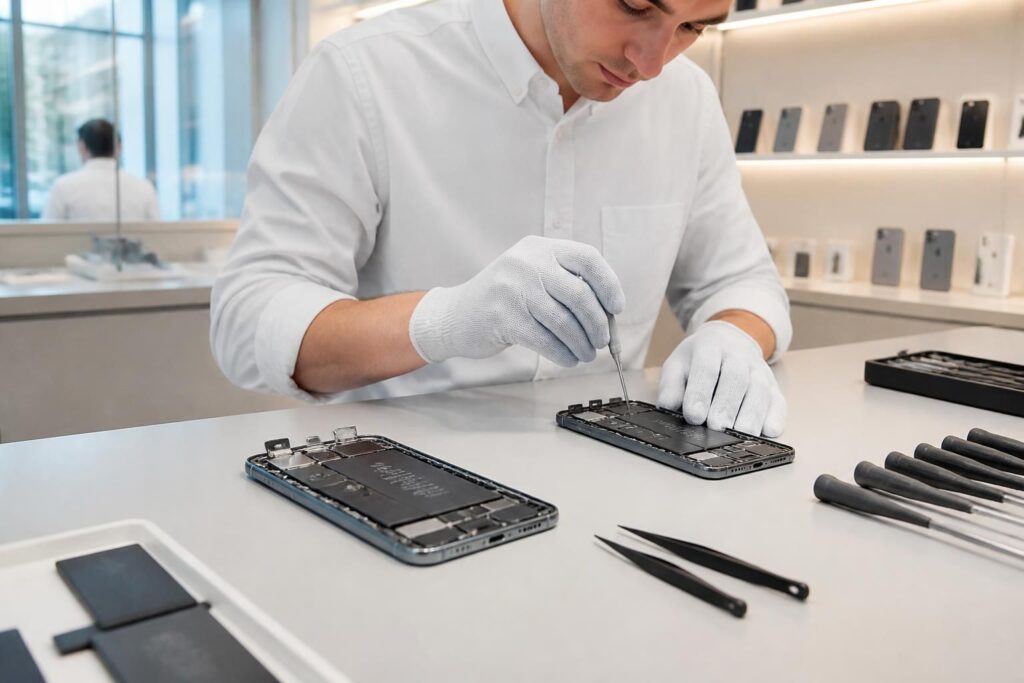
Quand la batterie d’un iPhone 12 Pro ou d’un iPhone 12 Pro Max commence à faiblir, le quotidien se dérègle vite : autonomie en chute libre, charge imprévisible, alertes de santé de batterie qui apparaissent au mauvais moment. Le service Apple reste l’option la plus cadrée pour un changer batterie propre, avec un coût remplacement annoncé à l’avance et une intervention compatible avec le niveau d’exigence attendu sur ces modèles Pro. La vraie question n’est pas comment. C’est pourquoi certains choisissent Apple alors que d’autres passent par un centre réparation indépendant. Entre prix batterie, qualité des pièces et sérénité après passage en atelier, le choix se joue souvent sur un détail concret : la fiabilité au quotidien.
L’article en bref
Le remplacement de la batterie sur iPhone 12 Pro et iPhone 12 Pro Max suit une logique simple : tarif officiel, prise en charge cadrée et résultat prévisible. Le sujet se résume surtout à comparer le service Apple avec les alternatives du marché.
- Tarif Apple clair : prix fixe pour batterie iPhone 12 Pro et Pro Max
- Choix de réparation : Apple Store ou centre réparation agréé
- Écart de coût : prix batterie variable selon la prise en charge
- Décision pratique : priorité à la fiabilité et à l’autonomie
Un remplacement bien choisi évite les mauvaises surprises et redonne à l’iPhone son autonomie d’origine.
Chez Apple, le tarif de remplacement de batterie pour iPhone 12 Pro et iPhone 12 Pro Max se situe à 75 € hors AppleCare+. Le positionnement est homogène avec les autres modèles de la génération 12, ce qui simplifie la lecture du devis. Pas besoin de calcul compliqué : le prix affiché par le service Apple sert de repère net, sans zone grise.
Pour un appareil encore performant mais freiné par une batterie défectueuse, cette réparation reste souvent plus rationnelle qu’un changement complet de smartphone. Un iPhone 12 Pro bien entretenu continue d’offrir une excellente fluidité, et la batterie est souvent le seul point qui fatigue réellement avec le temps. Le navigateur adore ça : moins d’improvisation, plus de stabilité. Ici, c’est la même logique.
Prix batterie iPhone 12 Pro et iPhone 12 Pro Max chez Apple en 2026
Le tarif officiel reste le même pour les deux modèles : 75 € pour remplacer la batterie d’un batterie iPhone 12 de la gamme Pro, hors garantie étendue. Ce montant place la réparation dans une zone raisonnable au regard de la valeur du téléphone et de la qualité attendue d’une réparation Apple.
Le point important, ce n’est pas seulement le montant. C’est aussi la cohérence du service : diagnostic, remplacement, contrôle, puis restitution avec une prise en charge conforme aux standards Apple. Quand une batterie devient instable, le gain est immédiat : autonomie plus stable, charge plus régulière, et moins de coupures à 20 %.
| Modèle | Prix batterie chez Apple | AppleCare+ | Remarque |
|---|---|---|---|
| iPhone 12 Pro | 75 € | Souvent inclus selon couverture | Tarif fixe hors assistance étendue |
| iPhone 12 Pro Max | 75 € | Souvent inclus selon couverture | Même niveau de prix que le 12 Pro |
Le piège ici : comparer uniquement le prix brut sans regarder la portée du service. Un atelier moins cher peut sembler attractif, mais si le résultat manque de régularité ou si la batterie ne tient pas dans la durée, l’économie disparaît vite. Une réparation propre, c’est aussi une réparation qui évite le retour au comptoir.
Réparation Apple : comment se déroule le changement de batterie
Le passage par Apple commence généralement par un diagnostic puis par une estimation claire du coût remplacement. Selon l’état de l’appareil, la réparation peut se faire en Apple Store ou via un centre réparation agréé. Le parcours est pensé pour limiter les surprises, ce qui reste précieux lorsqu’un iPhone sert à tout : travail, navigation, photos, paiements.
Pour un modèle encore aussi utilisé que le iPhone 12 Pro Max, la logique Apple reste pragmatique : remplacer la batterie avant que l’usure ne dégrade l’usage global. Une batterie fatiguée n’est pas seulement un problème d’autonomie. Elle finit par ralentir les habitudes, forcer des recharges multiples et créer une dépendance au chargeur.
Voici les cas où la réparation devient particulièrement pertinente :
- autonomie trop faible malgré une utilisation modérée
- extinctions soudaines avant 10 ou 20 %
- charge instable ou cycles anormalement rapides
- message de santé batterie indiquant une usure avancée
Le vrai avantage du service Apple tient dans la prévisibilité. Pas besoin de deviner si la pièce est compatible, ni de parier sur une qualité aléatoire. Quand la priorité est la tranquillité, ce cadre vaut souvent plus qu’un écart de quelques dizaines d’euros.
Quand éviter d’attendre trop longtemps
Le plus mauvais réflexe consiste à repousser trop loin le remplacement. Une batterie défectueuse peut finir par dégrader la stabilité générale du téléphone, surtout si le système compense une usure trop forte. Si l’autonomie devient imprévisible, le moment est déjà venu.
Un cas fréquent illustre bien la situation : un utilisateur de 12 Pro Max tient encore une journée complète au départ, puis perd 40 % d’autonomie en quelques mois. Le changement de batterie ne sert pas seulement à “faire durer” l’appareil. Il remet l’expérience à niveau, sans changer de machine.
Une batterie remplacée au bon moment redonne de l’air au téléphone. C’est souvent là que la réparation prend tout son sens.
Comparer Apple et centre réparation : ce qui change vraiment
Entre Apple et un centre réparation, la différence ne se limite pas au ticket final. Apple mise sur le cadre, la traçabilité et un tarif officiel. Un réparateur indépendant peut proposer un prix plus bas, parfois avec plus de souplesse, mais la qualité dépend alors fortement de l’atelier, des pièces et de la garantie proposée.
Sur un iPhone 12 Pro, le calcul doit rester simple : si l’appareil a encore une belle valeur d’usage, le passage par Apple sécurise l’opération. Si le budget est serré, un atelier sérieux peut être pertinent, à condition d’être transparent sur les pièces et le suivi. Moins de propriétés = plus de fluidité, même dans une décision de réparation.
| Critère | Apple | Centre réparation indépendant |
|---|---|---|
| Prix | Fixe et connu à l’avance | Souvent plus variable |
| Pièces | Standard Apple | Qualité selon l’atelier |
| Garantie | Cadrée par le service Apple | Très variable selon le centre |
| Confort | Procédure rassurante | Peut être plus rapide localement |
Le bon choix dépend surtout du niveau d’exigence. Pour un téléphone principal, la cohérence du service Apple reste difficile à battre. Pour un usage secondaire ou un budget plus serré, un atelier fiable peut faire le travail. La vraie question n’est pas le prix seul, c’est l’équilibre entre coût et sérénité.
Ce qu’il faut vérifier avant de lancer la réparation
Avant de faire changer batterie sur un iPhone 12 Pro ou un 12 Pro Max, quelques vérifications évitent les mauvaises surprises. L’état général de l’appareil compte autant que la batterie elle-même : écran, connecteur, historique de chute, et éventuelle humidité. Le diagnostic sert justement à confirmer que la panne principale vient bien de là.
Une demande bien préparée permet aussi de gagner du temps lors du passage en atelier. Si l’iPhone présente plusieurs signes d’usure, Apple ou le réparateur peut proposer une lecture plus complète du problème. Dans bien des cas, il s’agit simplement d’une batterie arrivée au bout du cycle utile.
Les points à contrôler avant intervention :
- niveau de santé batterie dans les réglages
- présence de redémarrages ou d’extinctions soudaines
- état de la charge via câble ou MagSafe
- traces de choc ou de gonflement
Cette étape est simple, mais elle fait souvent la différence entre une réparation propre et un diagnostic flou. Si votre iPhone lag côté autonomie, regardez ici d’abord. Ensuite seulement, choisissez le bon canal de prise en charge.
Combien coûte le remplacement de batterie d’un iPhone 12 Pro chez Apple ?
Le tarif officiel hors AppleCare+ est de 75 € pour l’iPhone 12 Pro, avec le même prix pour le 12 Pro Max. Le montant peut varier uniquement selon une couverture de service ou une prise en charge particulière.
Le prix est-il différent entre iPhone 12 Pro et iPhone 12 Pro Max ?
Non, Apple affiche le même tarif pour les deux modèles dans cette catégorie. Le coût remplacement reste donc identique à 75 € hors garantie étendue.
Pourquoi passer par Apple plutôt qu’un centre réparation ?
Apple offre un cadre très prévisible : tarif clair, service cadré, pièces conformes et prise en charge structurée. Un centre réparation peut être moins cher, mais la qualité dépend beaucoup de l’atelier choisi.
Comment savoir si la batterie est vraiment en cause ?
Les signes les plus courants sont une autonomie qui chute vite, des extinctions soudaines, une charge instable et un message de santé batterie dégradée dans les réglages. Si plusieurs symptômes apparaissent, le remplacement devient logique.